DESCRIPTION
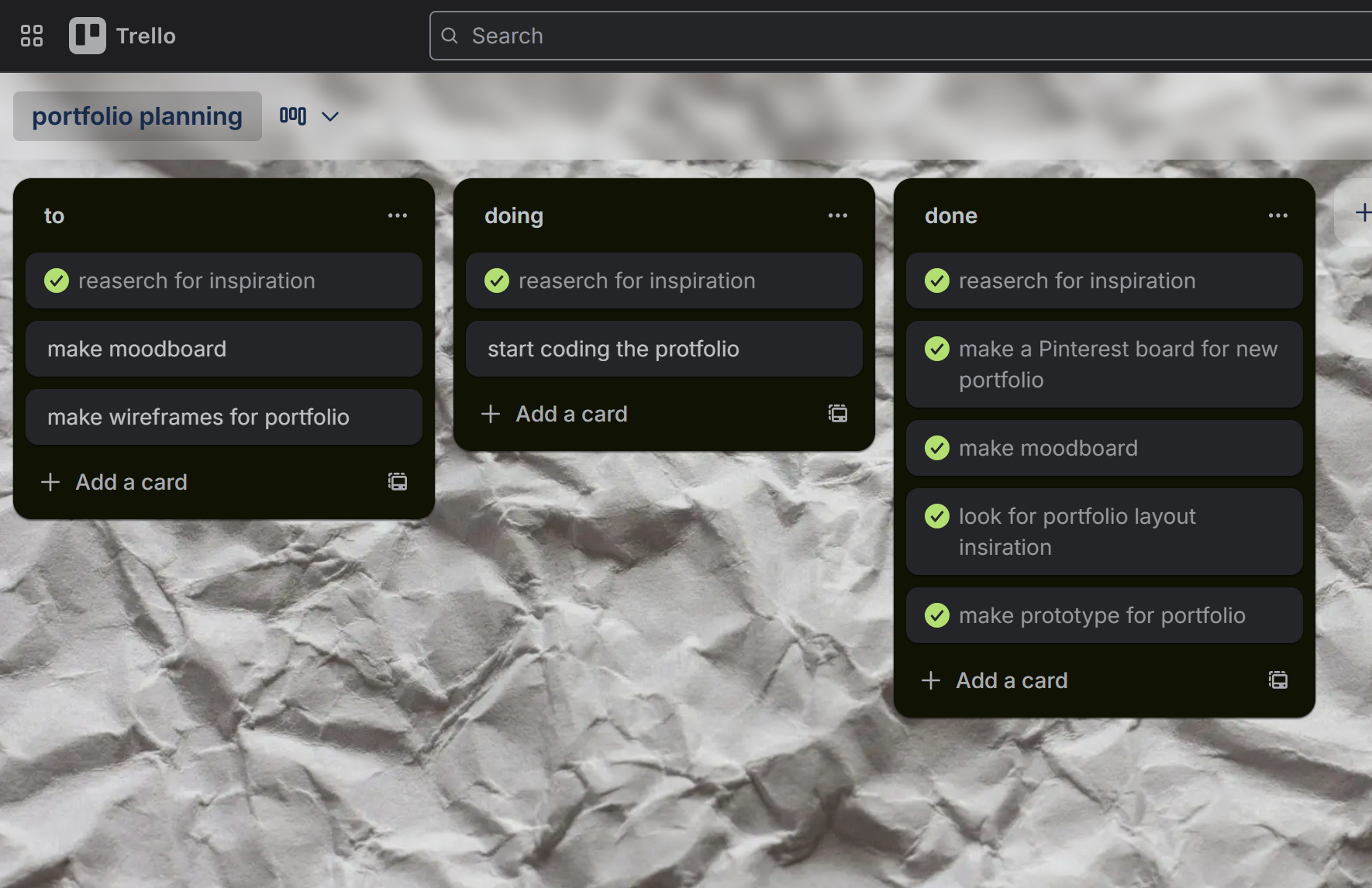
For this proof, I created a portfolio planning schedule to help me stay on track with my work. I used Trello to organize all my tasks and deadlines, dividing them into sections like “To Do, ” “Doing,” and “Done.”
GOAL
My goal was to manage my time better and keep a clear overview of what still needed to be completed for my portfolio. I wanted to avoid falling behind and make sure I stayed consistent throughout the process.
REFLECTION
Using Trello really helped me stay organized. I mostly followed my schedule and managed to stay on track for most of the project. I did copy parts of my schedule at one point, which threw me off a bit, but overall it worked well. Even though I didn’t fully finish my website, I still completed most of the important parts, like the design and content.
WHY PROOF BELONGS
This proof nails LO4's Professional Standards because I actively applied the Kanban methodology using Trello, which is a key approach in professional project management. By setting up the "To Do," "Doing," and "Done" workflow , I was able to successfully formulate project goals (e.g., specific design tasks) and continuously make decisions about priorities and workload. This systematic approach forced me to execute the work with discipline. The final Trello board itself serves as a clear, transparent report of the entire project lifecycle, demonstrating my ability to manage a complex deliverable with professional-grade structure and efficiency.
ACTION
I made a Trello account and started building a planning board for my portfolio. I added cards for each task, such as making mood boards, designing wireframes, and developing the prototype. I updated my Trello board regularly to track my progress and see what was already done.
DESCRIPTION
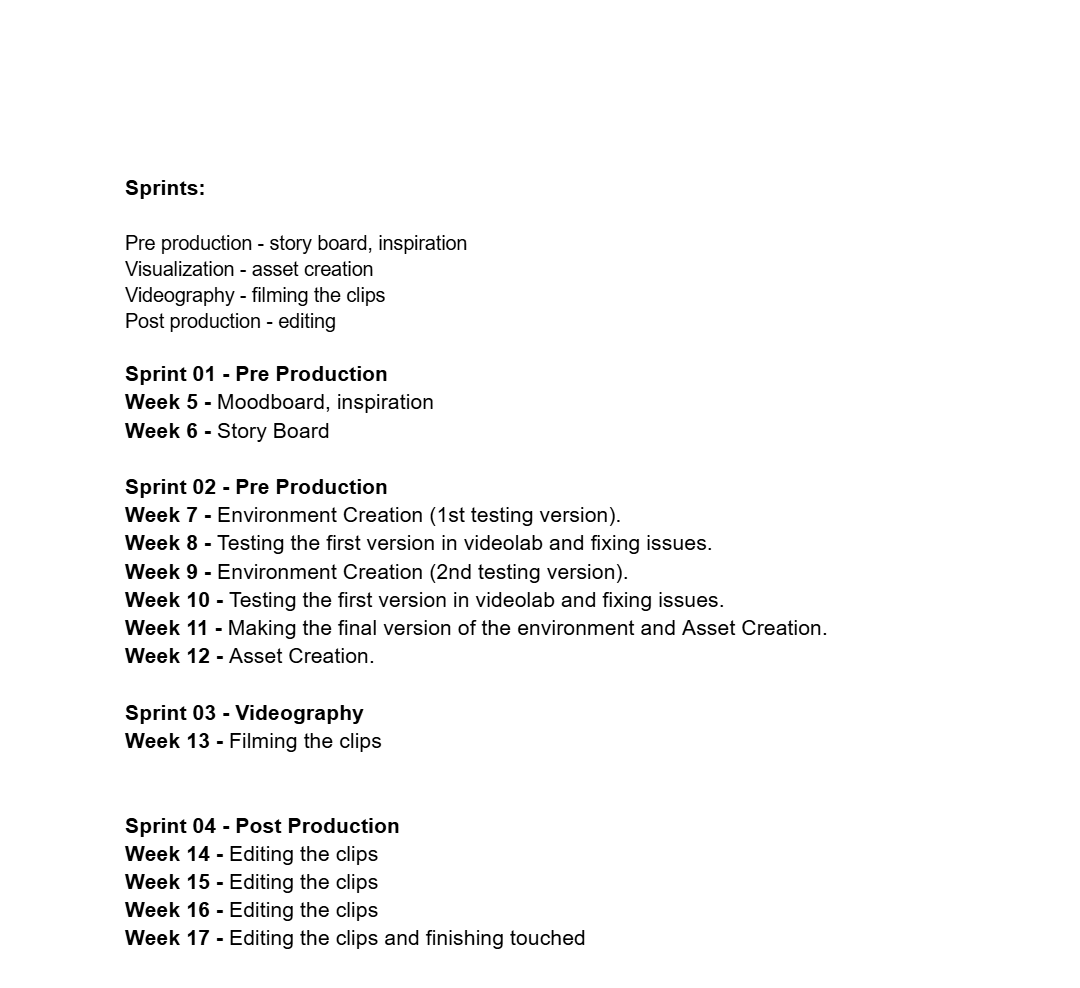
For this proof, I created a project plan for our music video project. The plan helped define what we wanted to do, how we were going to do it, and the best way to achieve it.s.
GOAL
My goal was to give the team a clear and structured plan so everyone knew their roles, deadlines, and responsibilities. I wanted to make sure we stayed organized and on track throughout the project.
REFLECTION
Making this project plan really helped me and my team stay organized and focused. It gave us a clear structure to follow and made communication easier. Even though the project isn’t fully finished yet, the plan has kept us aligned and helped us meet most of our goals on time.
WHY PROOF BELONGS
This proof belongs to Learning Outcome 4 because I applied a fundamental methodological approach used in every professional field: project planning. By creating a formal plan defining roles and deadlines, I successfully formulated project goals , involved stakeholders (the team), and made key decisions upfront. The plan acts as the initial report or blueprint, demonstrating the essential professional standard of bringing structure and organization to a complex team project.
ACTION
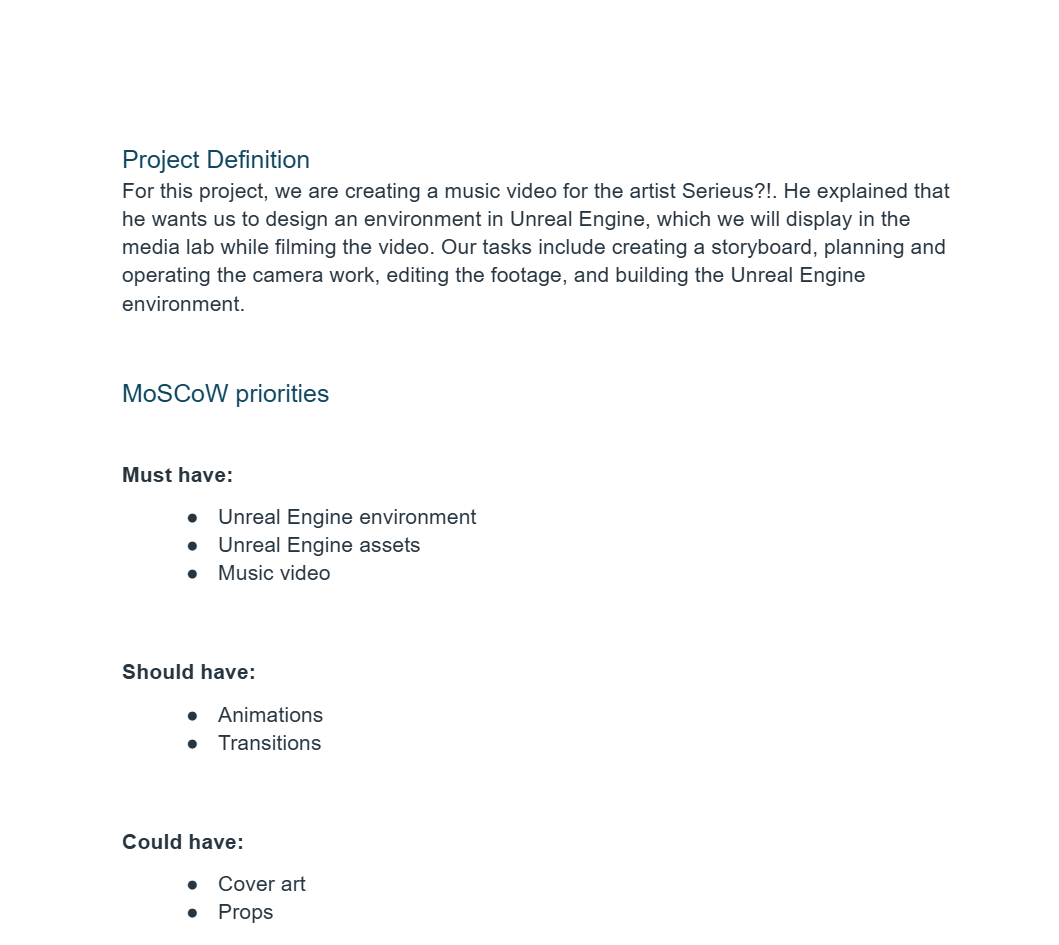
I worked on the full project plan, which included the project definition, team roles, planning schedule, and task lists. I also created a MoSCoW list (Must-Have, Should-Have, Could-Have, Won’t-Have) to prioritize what features were most important. For example, the must-haves included a new Unreal Engine environment and the music video itself, while the should-haves were animations and transitions. I also made a risk assessment that listed possible problems that could affect the project and how we could reduce those risks.
.png)
DESCRIPTION
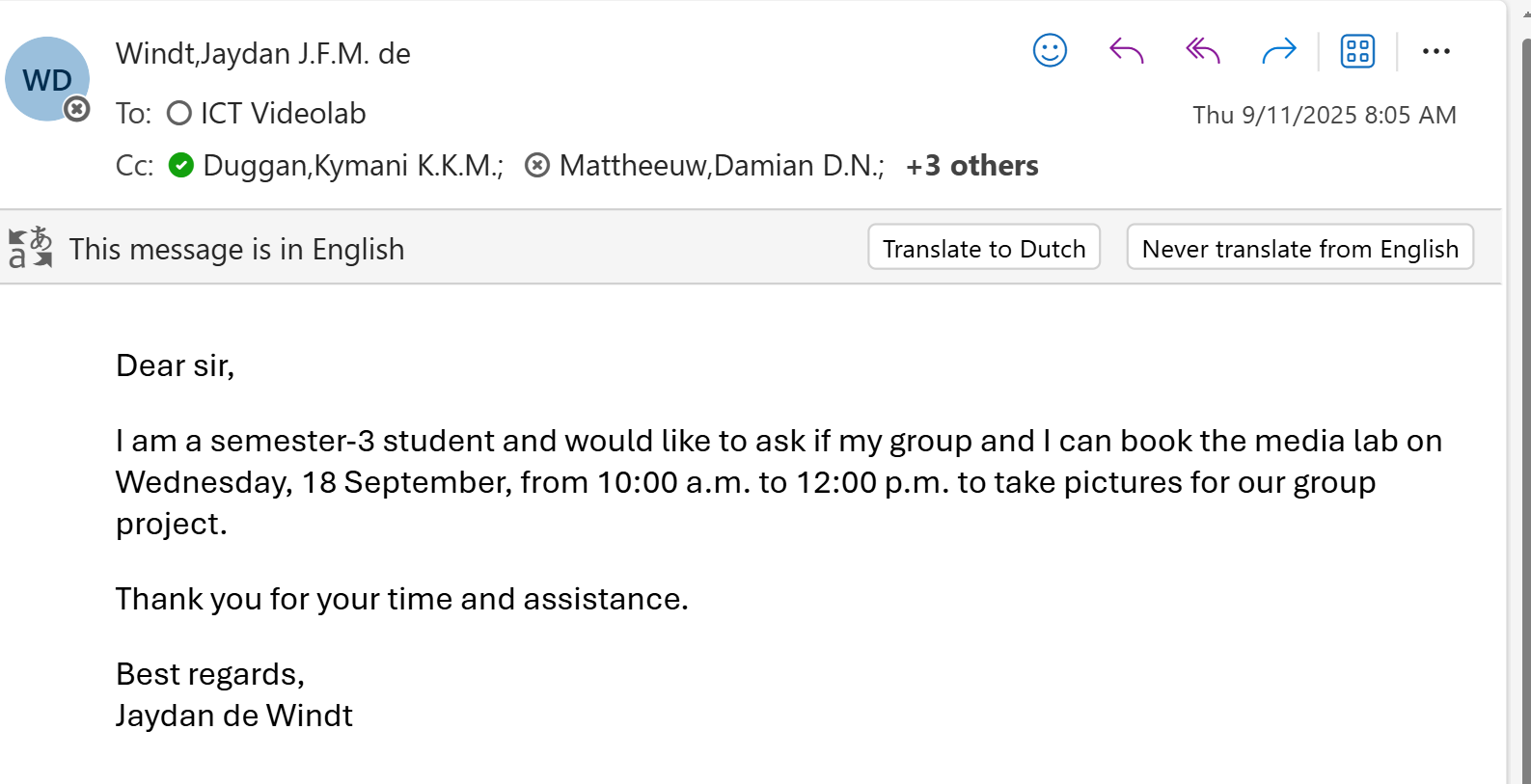
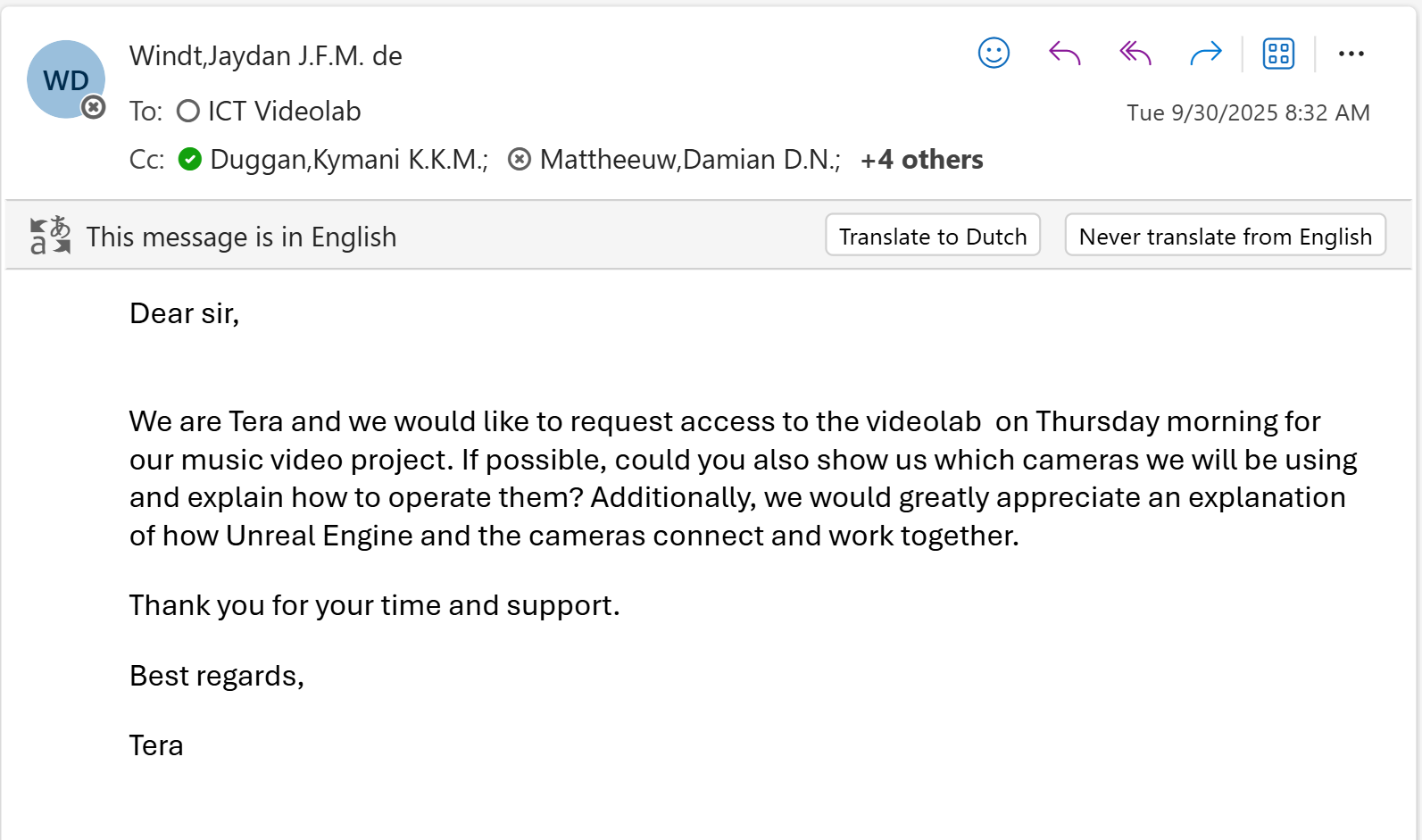
For this proof, I sent several emails to the Media Lab to book the space for our music video project. These emails were necessary to arrange access to the equipment and environment we needed to test and film our project.
GOAL
The main goal was to communicate professionally with the Media Lab staff to schedule time for our group to use the lab. We wanted to explore how the cameras worked, what software we would use, and test our Unreal Engine environment on the LED screens.
REFLECTION
Writing these emails helped me improve my communication skills. It also showed me how important it is to be clear and professional when contacting staff for project-related needs. Thanks to these emails, we were able to test everything in the Media Lab, which really helped our project move forward.
WHY PROOF BELONGS
This proof belongs to Learning Outcome 4 because it shows I used a professional approach to involve stakeholders. The Media Lab staff were essential stakeholders controlling the resources we needed. Sending structured, professional emails was the methodological approach I used to formulate specific project goals (like screen testing) and secure access. This process successfully enabled our team to conduct the necessary applied research, proving I can manage external professional dependencies to deliver on a project.
ACTION
I wrote and sent two main emails. The first email was to book the Media Lab so we could get familiar with the cameras and the setup. The second email was to request another session to test our environment on the LED screens and figure out camera positioning. I made sure the emails were clear, polite, and included all the necessary details. After sending them, the Media Lab team replied and scheduled our group to use the space.
DESCRIPTION
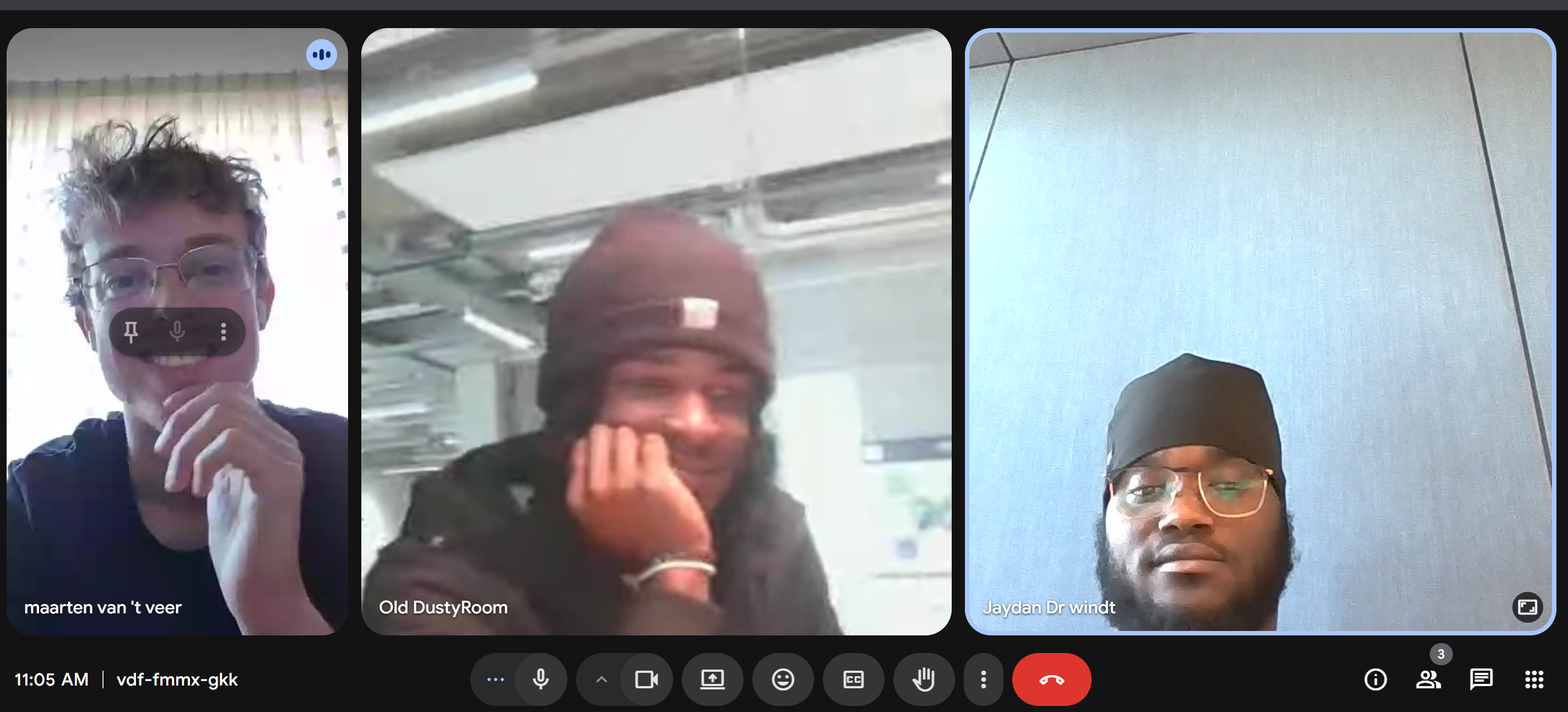
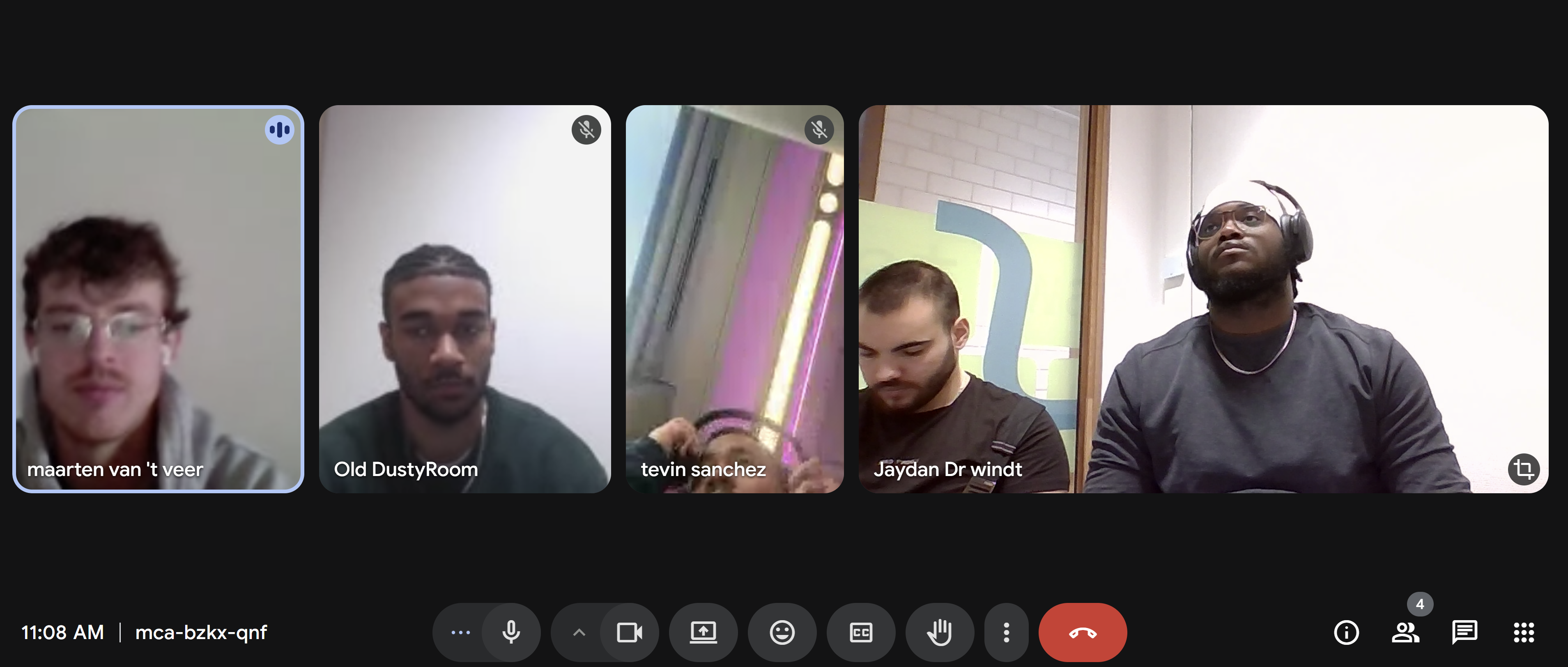
This proof covers how I consistently communicated with the client throughout the project. It wasn't just random emails; we had a system. We used Teams for anything official and WhatsApp for quick chats, plus we locked in regular online meetings every single week. This whole system was about keeping him in the loop and making sure nothing got stuck waiting on feedback.
GOAL
My goal was to apply a solid professional approach to client management. I wanted to make sure the client was completely involved and felt like they always knew what was going on. This meant being proactive—telling him when I finished something, uploading files right away, and raising my hand whenever I needed input or hit a roadblock. Basically, I wanted to set a high standard for how reliable and transparent I am with clients.
REFLECTION
I genuinely appreciated how communicative the client was; being able to reach him during school hours made a huge difference. This experience showed me how much faster and smoother a project runs when you have great, reliable communication. It really set a clear benchmark for me, showing me this is how I want to involve and communicate with any client or stakeholder in the future. It’s definitely a professional standard I will maintain.
WHY PROOF BELONGS
This proof demonstrates me directly applying a relevant methodological approach for professional stakeholder engagement. I used standard industry tools and established a regular meeting cadence to actively involve the client. In those communications, I was constantly providing advice based on the technical limits or making decisions with his input. This consistent, structured interaction meets the requirement for maintaining professional standards throughout the project.
ACTION
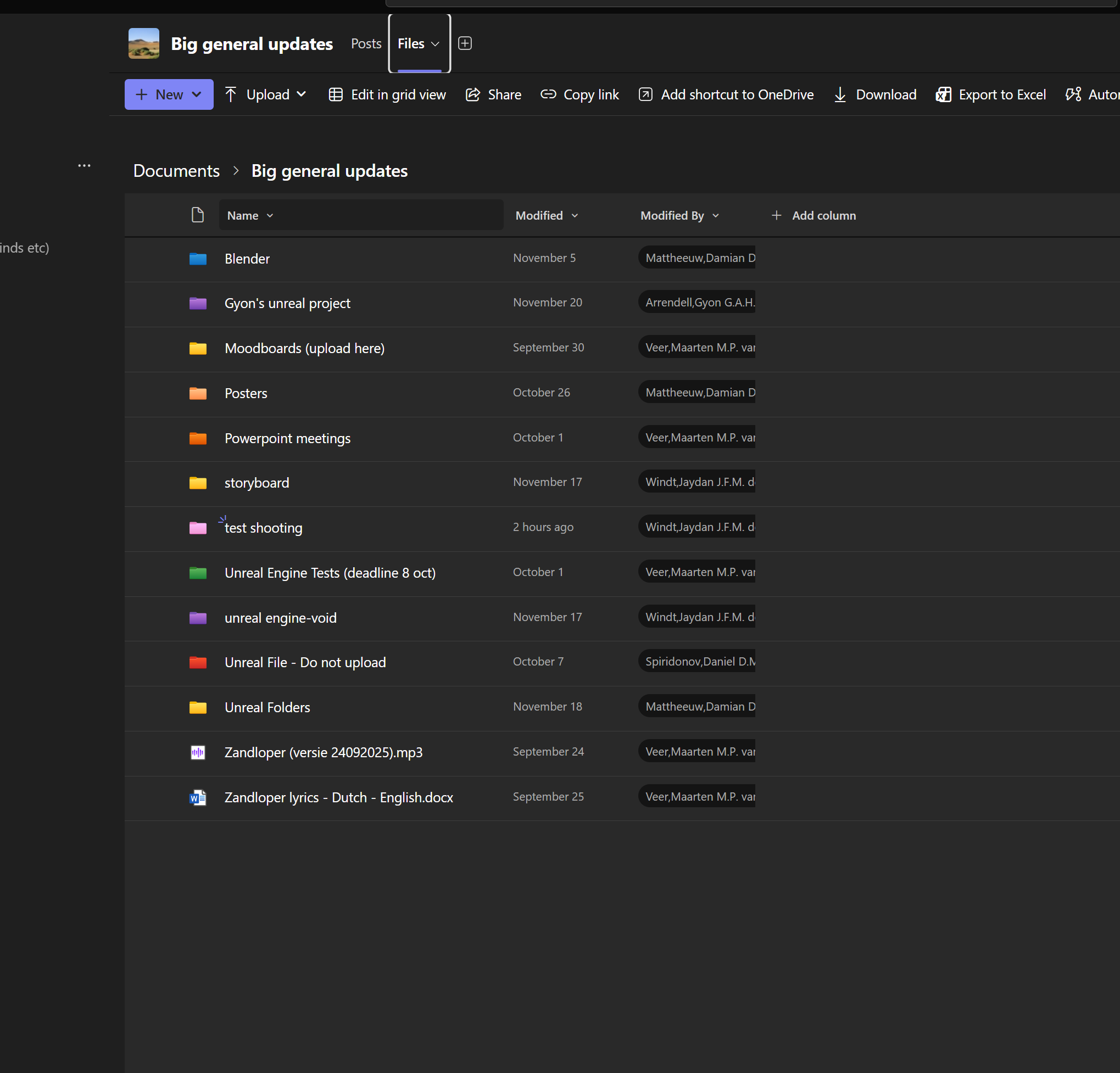
I kept up constant, proactive communication using the available channels: I messaged the client as soon as I finished a task, uploaded files to Teams, or if I needed clarification from him to continue my work. In our scheduled online meetings, I always gave a clear, structured update about my progress, what I planned to do next, what I needed from him, and sometimes explained what I couldn't do and why. Crucially, I uploaded my project files straight into Teams frequently just in case the client wanted to check my work for himself.
DESCRIPTION
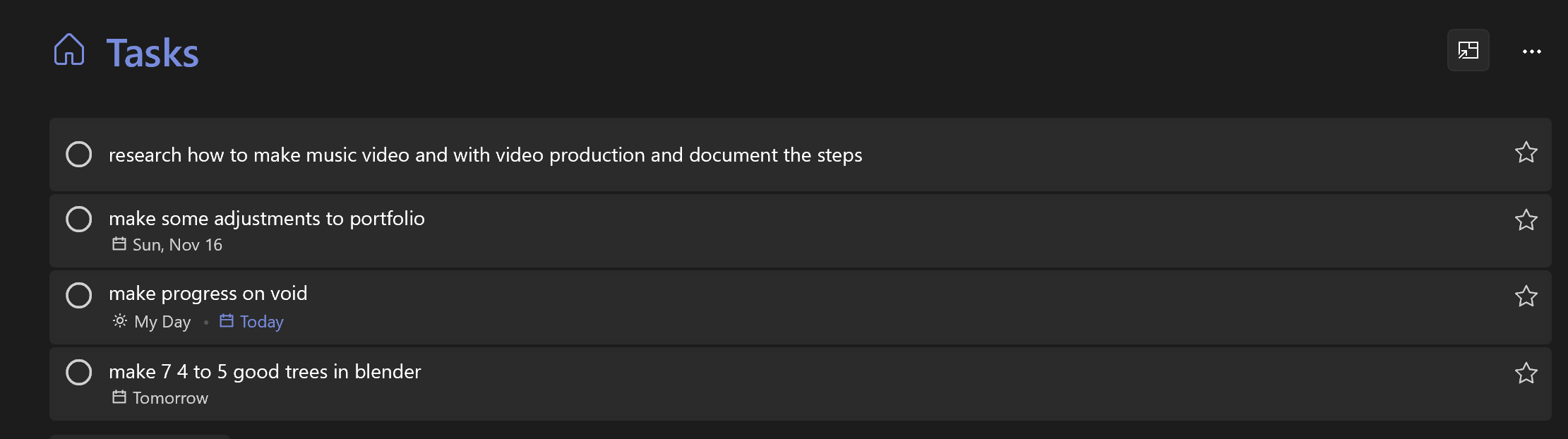
This proof is about how I personally managed all my work and deadlines using a planning tool called Microsoft To Do. It’s basically a digital to-do list, but I used it seriously, like a professional project manager uses a big system. It helped me take the project's overall goals and turn them into small, achievable steps I could tick off every day.
GOAL
The goal was to apply a professional method to my personal workload and make sure I hit all the deadlines. I didn't want to rely on just remembering things. I needed a system that helped me clearly formulate what my daily project goals were. Using To Do guaranteed that I stayed focused and never forgot anything that needed to be completed.
REFLECTION
Honestly, setting up my tasks in Microsoft To Do made my life a lot easier. It took away all the stress of figuring out what to do next because the system told me. It showed me how using even a simple tool consistently is a huge part of professional standards. It really helped me deliver on time, and I definitely plan on using this approach to manage my tasks on every project from now on.
WHY PROOF BELONGS
This demonstrates how I apply a relevant methodological approach for organization and self-management, which is key to professional standards. By using Microsoft To Do, I effectively formulated project goals into clear tasks and deadlines, ensuring I was always on track for the final delivery of the project components. This systematic approach proves I can manage my work professionally.
ACTION
I used Microsoft To Do to plan everything: I listed every single task that needed to be done, set a specific deadline for it, and assigned it to the correct day. Each morning, I knew exactly what my objective was. If I finished something or needed to update a deadline, I logged it right there. This kept me totally on track with all my assignments and deliverables throughout the whole project.